
The short version
- Check the lease and ask the landlord in writing before drilling. Save the reply.
- A stud mount leaves a few small holes — easy to patch when you move out.
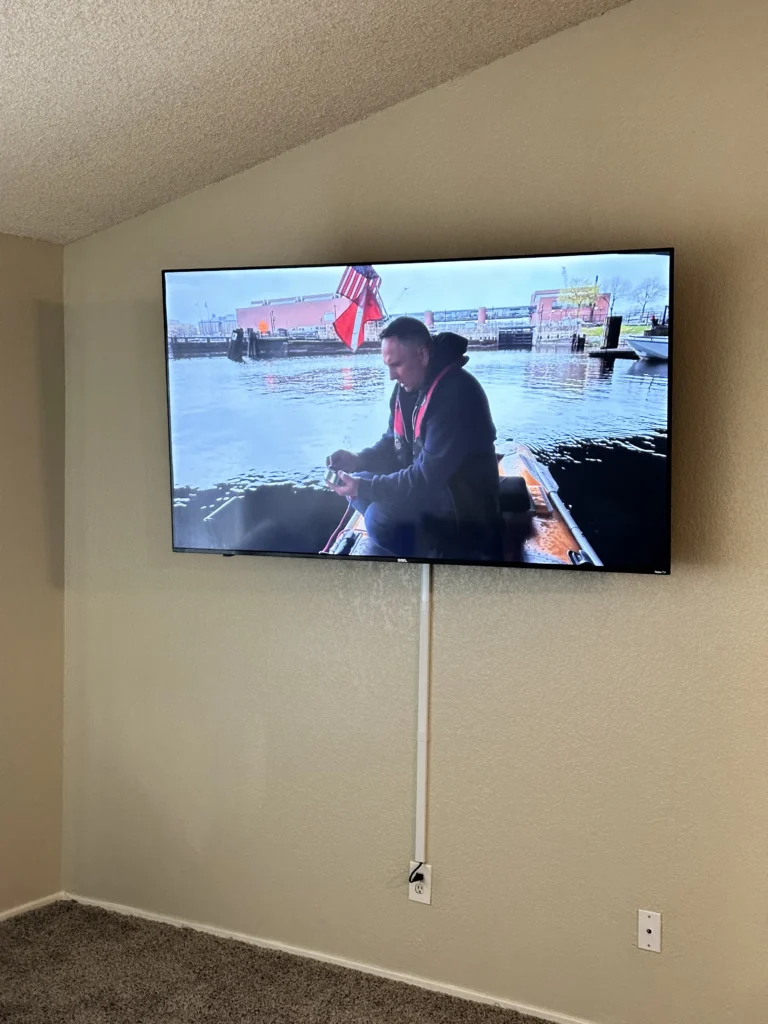
- Choose rental-friendly options: a cord cover instead of cables inside the wall, and drywall instead of brick, stone or tile.
- If the answer is no, a TV floor stand gives a similar look without holes.
1. Check the lease, then ask in writing
Many leases require the landlord’s permission for changes to the walls, and rules on deposits and repairs vary. A short text or email usually does it. Include:
- which wall, and the TV size;
- that the mount is bolted into the wall studs (not hung on drywall alone);
- that you’ll patch the holes when you move out — or ask whether they prefer to do it themselves.
Keep the reply. This isn’t legal advice — if your lease is unclear, ask your landlord or property manager directly.
2. What the holes look like
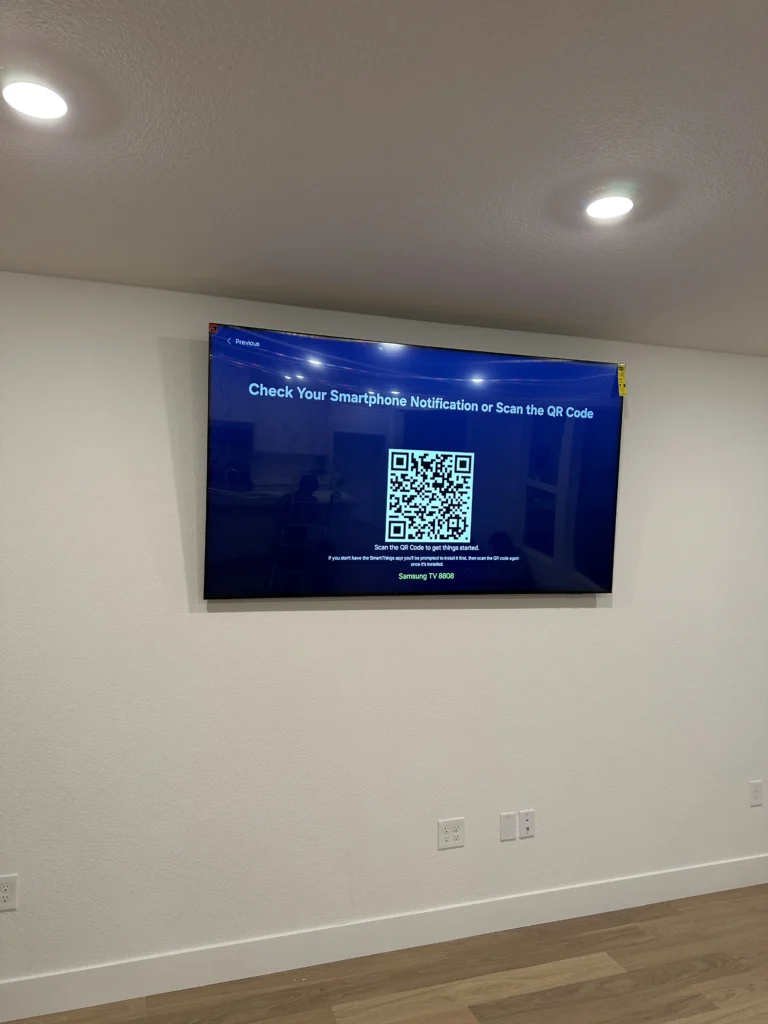
A standard mount on drywall is bolted into two studs, usually with two to four bolts. When it comes down, it leaves a few small holes, roughly pencil-width, hidden behind the TV the whole time you live there. Cables inside the wall are a different story: they need larger openings for the wall plates, which is why we suggest a cord cover in rentals.
3. Rental-friendly choices
- Cord cover instead of in-wall cables. It sits on the surface of the wall and comes off when you leave — adhesive can lift paint, so plan on a small touch-up.
- Drywall walls. Holes in brick, stone and tile are permanent and much harder to repair — only with clear approval.
- A fixed or tilting mount. Simple, close to the wall, and the same few holes as any stud mount.
- Keep all the hardware and the TV’s original stand, so moving out is easy.
4. Patching when you move out
Small bolt holes are patched with spackle, sanded flat once dry, and touched up with matching paint. Ask the landlord for the paint color if you don’t have it. A clean patch is hard to spot; an unpatched hole is the kind of thing that ends up on a move-out checklist.
5. If the landlord says no
A TV floor stand with a built-in mount holds the TV at wall-mount height without touching the wall, and moves with you. It won’t look quite as clean as a wall mount, but it leaves no holes at all.
TV wall mounting is $119 for TVs up to 65″, $149 for 70–86″ and from $189 for 87″ and up. A paintable cord cover (included) is $59. Your own compatible mount is free to use.