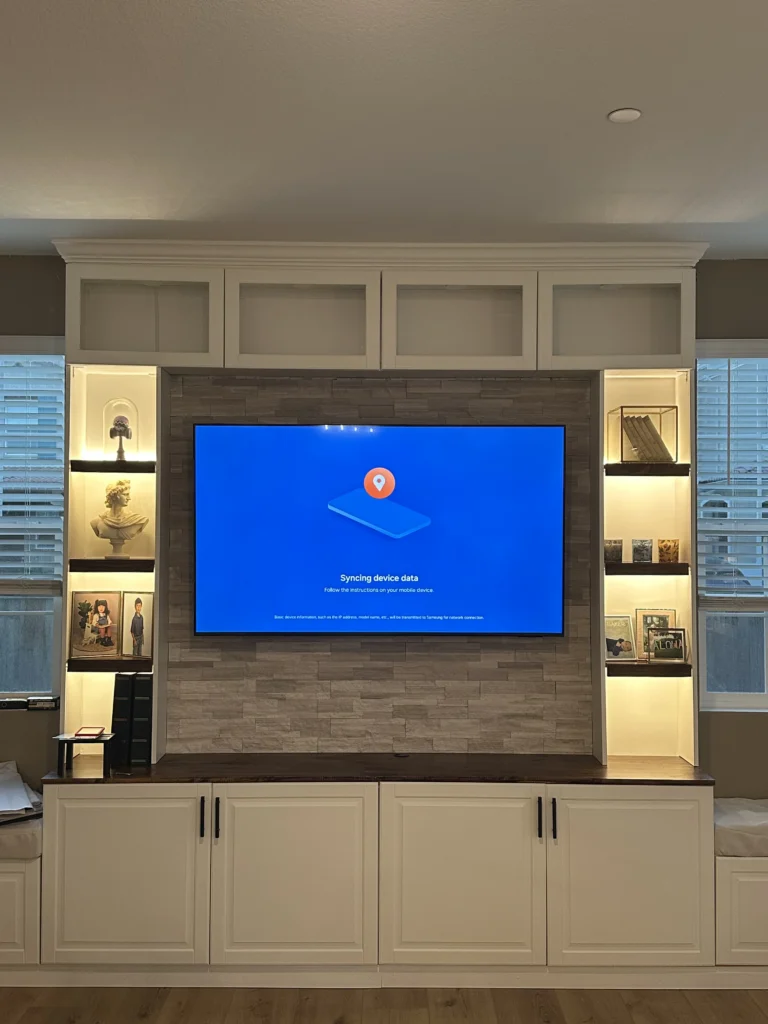
The short version
- Drywall: the drywall itself doesn’t hold the TV — the wood studs behind it do. The mount is bolted into at least two studs.
- Brick, block and concrete: masonry anchors rated for the load, drilled with a hammer drill.
- Stone and tile: slower drilling, uneven surfaces and permanent holes, so the spot is agreed on before drilling.
- Almost every wall works. What changes is the hardware, the time and the price.
1. Drywall over wood studs
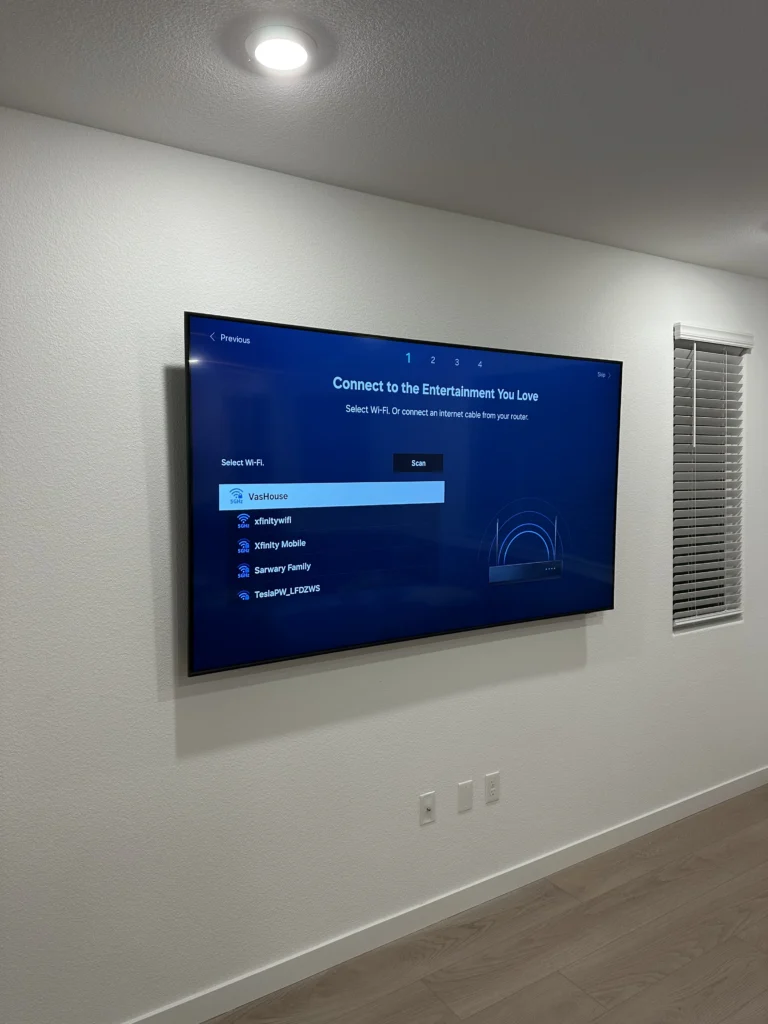
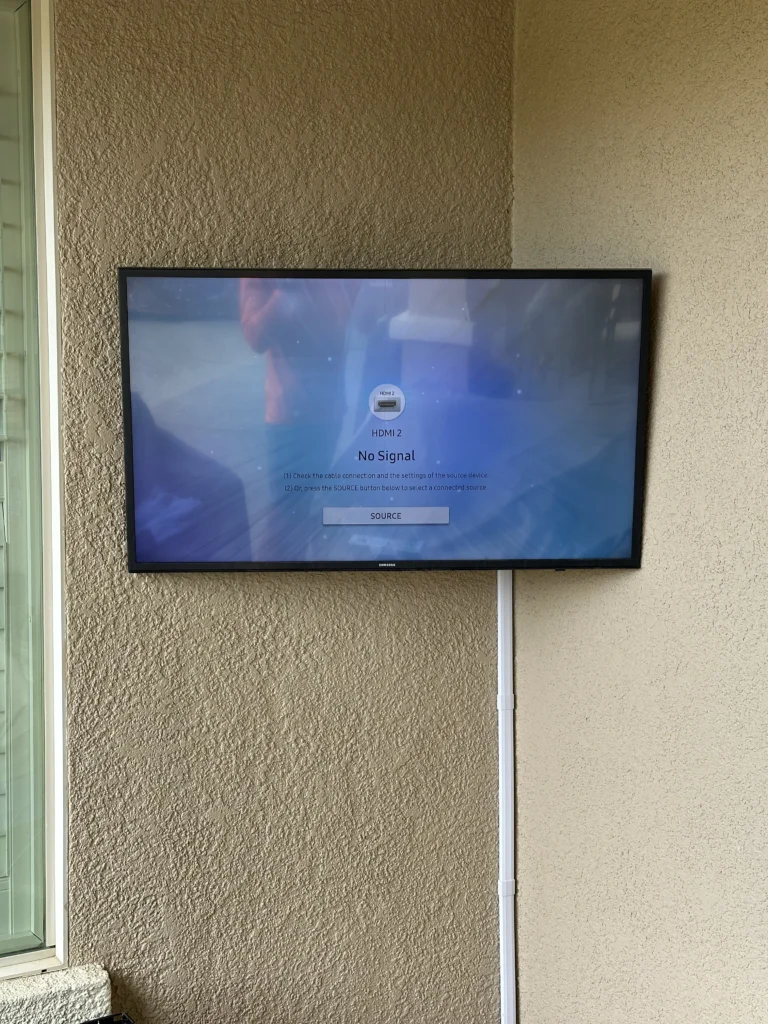
This is the wall in most homes. Behind the drywall are vertical wood studs, usually 16 inches apart center to center. The mount’s wall plate is bolted into at least two of them with lag bolts — that’s what carries the weight, not the drywall.
If the studs aren’t exactly where you want the TV, many fixed and tilting mounts let the TV slide sideways along the wall plate, so the screen can still be centered on the wall or the console. Full-motion mounts put more leverage on the wall when the arm is pulled out, which makes solid stud anchoring even more important.
Drywall anchors exist, and Samsung, for example, notes that toggle bolts can be used where there’s no stud — as long as the wall can hold the TV’s weight. For TVs we prefer studs whenever the layout allows.
2. Plaster walls in older homes
Older houses often have plaster over wood lath instead of drywall. Plaster is harder and more brittle: it can crack around a hole if it’s drilled carelessly, and finding studs behind it takes more care. The mount still goes into the studs — it just takes slower, more careful drilling.
3. Brick, block and concrete
Masonry walls hold a TV very well, but lag bolts don’t work in them. The mount is attached with masonry anchors rated for the TV and mount, in holes drilled with a hammer drill. It’s slower work, which is why there’s a surcharge.
4. Stone
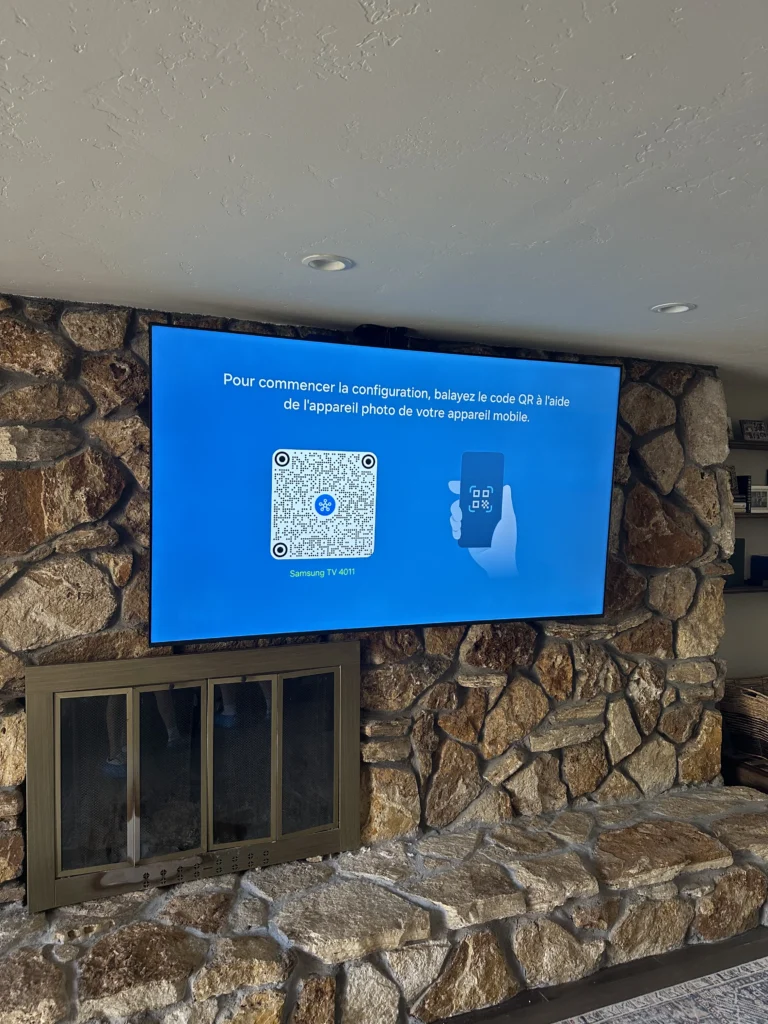
Stacked stone and river rock are common on fireplace walls. The face is uneven, so the mount may need spacers behind it to sit flat and keep the TV level. Holes in stone are permanent, so the position is marked with tape and a laser level and agreed on first.
5. Tile
Tile is drilled with tile bits at low speed so it doesn’t crack, and the anchors go into the structure behind it. A cracked or chipped tile is hard to replace if you don’t have spares, so this is not a job to rush.
What each wall costs
| Wall | What the mount goes into | Surcharge |
|---|---|---|
| Drywall over wood studs | Wood studs, lag bolts | none |
| Brick, block, concrete | Masonry anchors | +$49 |
| Stone or tile | Anchors into stone or the structure behind the tile | from +$69 |
Surcharges are added to the regular price: $119 for TVs up to 65″, $149 for 70–86″, from $189 for 87″ and up. Above a fireplace, only the larger of the fireplace and wall surcharges applies. Plaster or something unusual? Send a photo of the wall with your quote request.
What makes a mount safe on any wall
- The mount is rated for your TV’s weight and fits its mounting-hole pattern (VESA).
- The anchors go into structure — studs or masonry — not just the surface.
- The TV is level and checked for play before it’s handed over.