
The short version
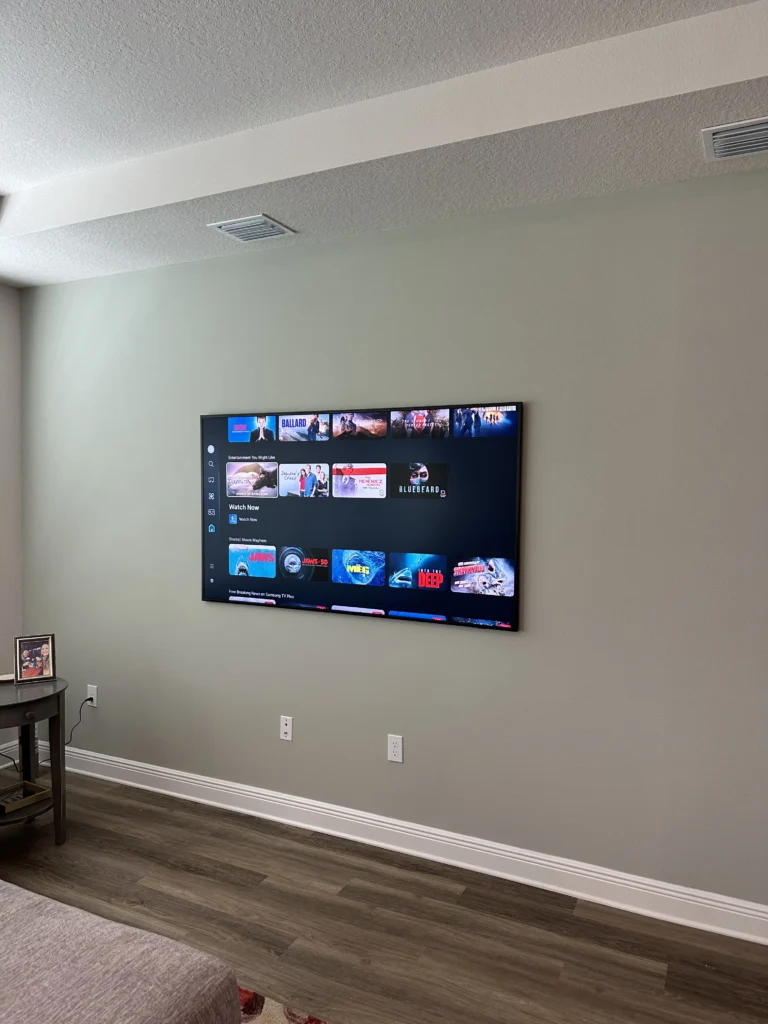
- Center of the screen at eye level. Measure from the seat you actually watch from. In most living rooms that’s roughly 40–45 inches from the floor.
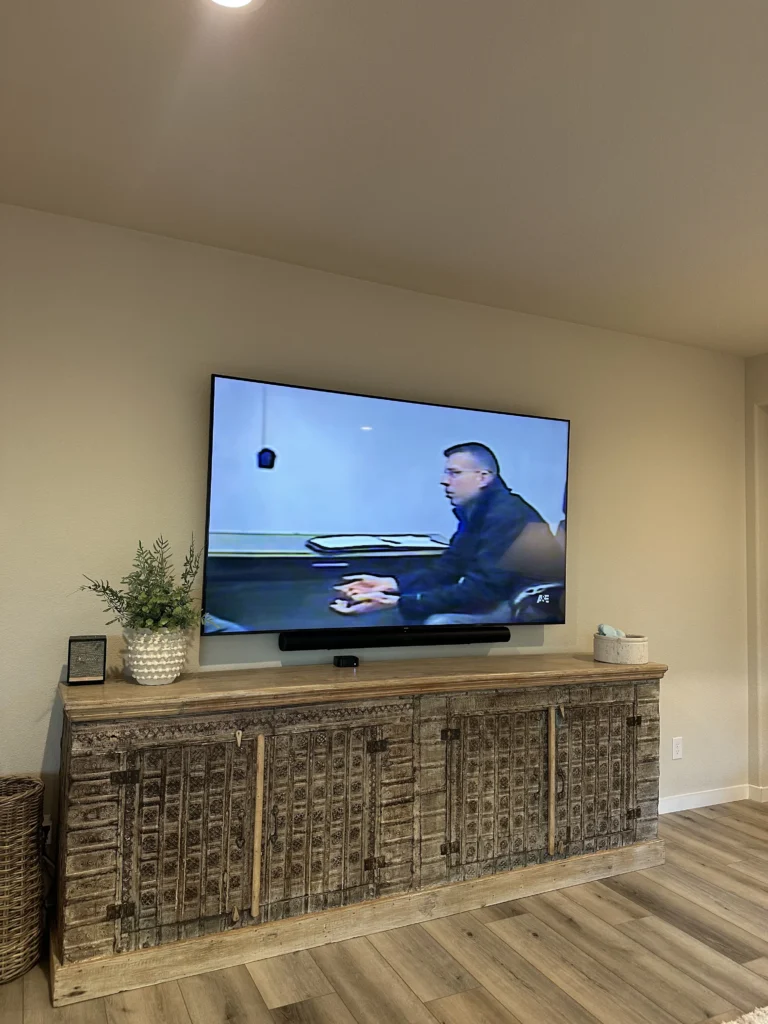
- Bigger TVs sit a little higher. An 85″ screen is about 42″ tall, so its bottom edge has to clear the console.
- Bedrooms and kitchens are different. Go higher and tilt the screen down toward where you sit or stand.
- Test with tape first. We tape the outline of the TV on the wall so you can check it from your couch before anything is drilled.
1. The rule: screen center at seated eye level
The most common mistake is mounting the TV where it “looks right” while standing in the room. You watch sitting down, so the height should be set from the couch. The center of the screen should be at or slightly below your eye level when you’re seated — for most adults on a typical sofa that works out to roughly 40–45 inches from the floor.
The easiest way to find your number: sit where you usually watch, look straight ahead at the wall, and have someone mark that height. That mark is where the middle of the screen goes.
2. Screen size changes the math
A TV’s height grows with its size. Approximate screen heights for standard 16:9 TVs:
| TV size | Screen height | Bottom edge with center at 42″ |
|---|---|---|
| 55″ | about 27″ | about 28″ from the floor |
| 65″ | about 32″ | about 26″ |
| 75″ | about 37″ | about 24″ |
| 85″ | about 42″ | about 21″ |
With a large TV over a media console, the bottom edge can end up behind the console or soundbar. In that case the TV goes a little higher than the ideal, just enough to clear what’s below it — usually a better trade than a TV that’s too small for the room.
3. Height by room
Living room
Follow the eye-level rule from your main seat. If people watch from several spots, set it for the seat used most and consider a full-motion mount that can turn toward the others.
Bedroom
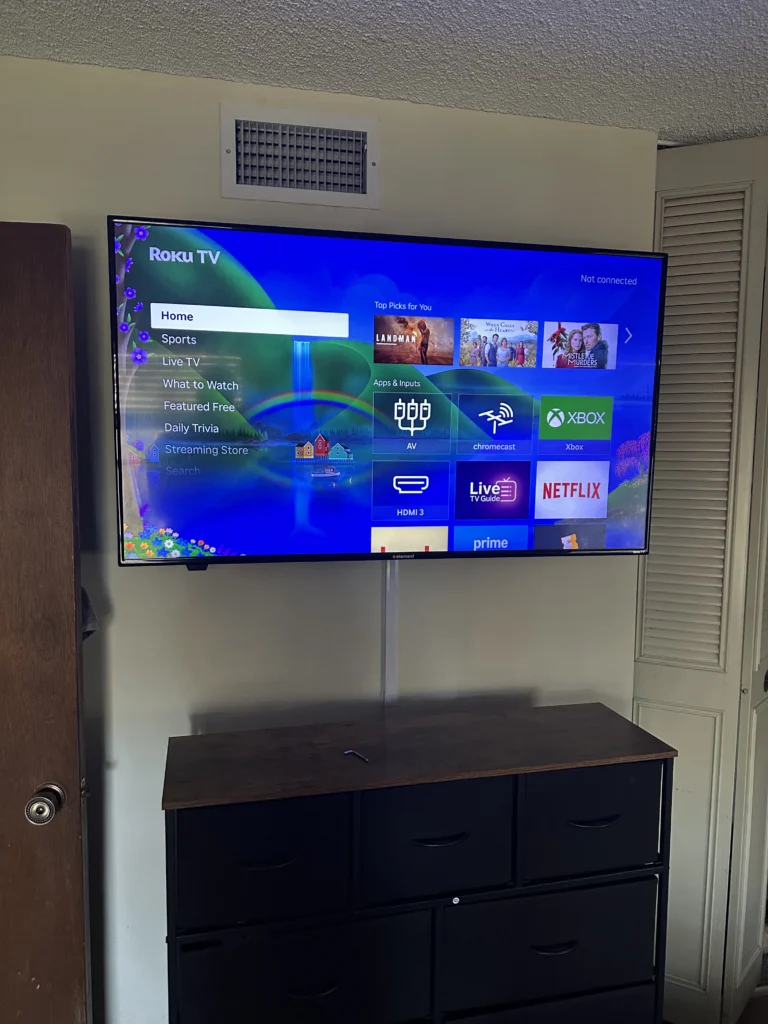
In bed you watch reclining, so your eyes point higher. Mount the TV higher than in a living room and angle it down with a tilting mount, so the screen faces the pillows instead of the foot of the bed.
Kitchen and standing areas
Where people mostly stand, the TV can go higher — the center near standing eye level. A full-motion mount helps when you watch from the counter one moment and the table the next.
Above a fireplace
Here the mantel decides the height, and the TV usually ends up well above eye level. Heat, mount options and walls are covered in our guide to mounting a TV above a fireplace.
Tall and vaulted walls
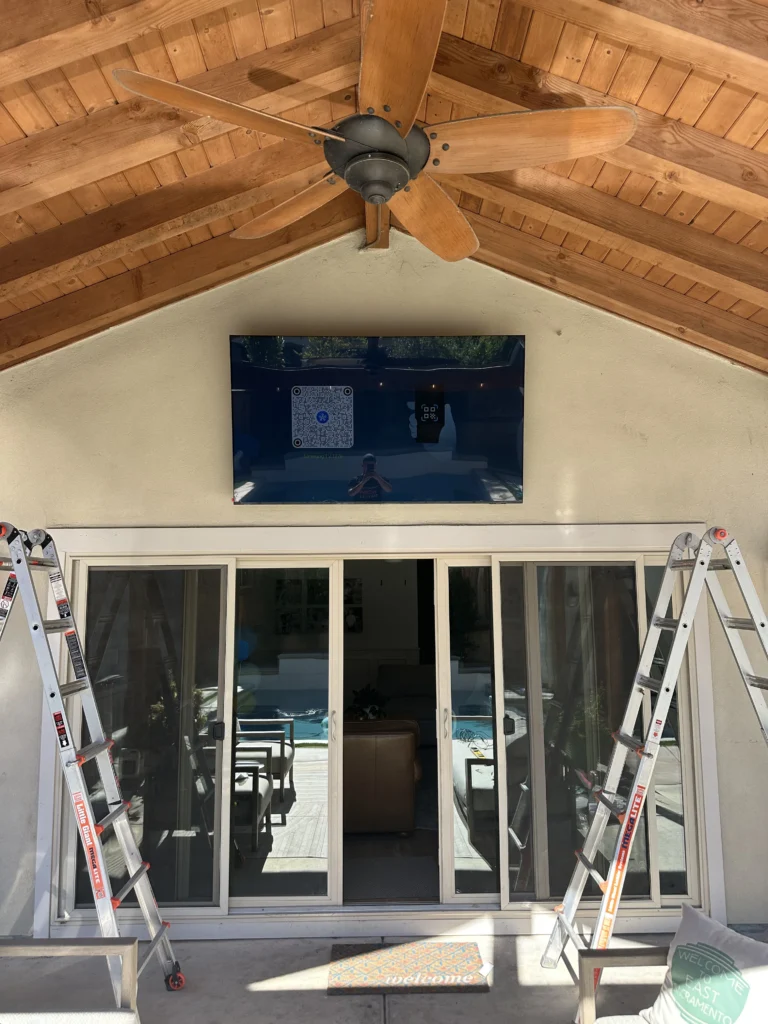
A TV high on a vaulted wall is often about the look of the room. If you’ll watch it a lot, a tilting mount angles the screen down toward the seats. High walls need a tall ladder — we bring one.
4. Beyond height: glare, outlets and what’s below
- Glare. Look at the wall at the time of day you usually watch. Light from windows or ceiling fixtures reflecting off the screen is easier to fix with placement than later. A tilting mount angled down cuts glare from lights above.
- Outlet. The TV’s power cord has to reach an outlet. A regular power cord can’t run inside the wall, and we don’t do electrical work — if you want an outlet behind the TV, an electrician adds it first. See how to hide TV wires.
- Soundbar. Leave a few inches below the TV if a soundbar goes under it. More in where to put a soundbar.
5. Check it before anything is drilled
Before drilling, the outline of the TV goes on the wall in painter’s tape at the planned height. Sit down, look at it for a minute, and move it up or down until it feels right — tape is free to move, holes aren’t. If you’re planning ahead, tape it up yourself and live with it for an evening.
TV wall mounting is $119 for TVs up to 65″, $149 for 70–86″ and from $189 for 87″ and up. A tilting mount we bring is from $49, a full-motion mount from $69; your own compatible mount is free to use.