
The short version
- Test the heat first. Run the fireplace, then touch the wall where the TV will hang. Too warm to keep your hand there — not a spot for a TV.
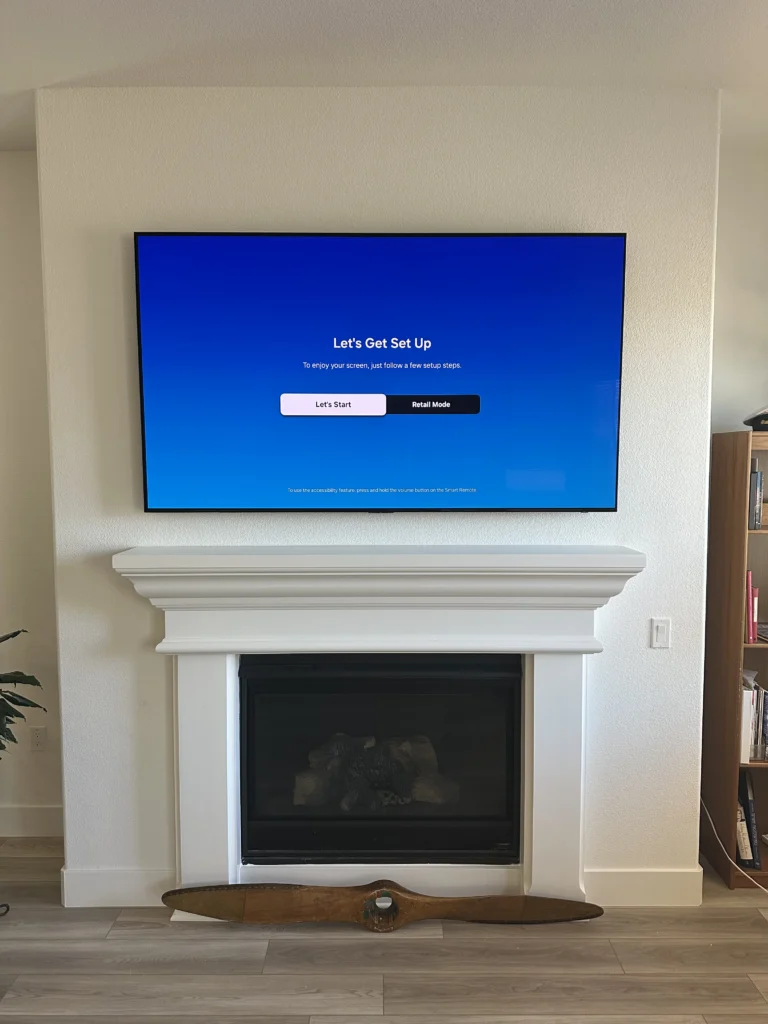
- Mind the height. The center of the screen should be at or a little below your eye level when you sit. Above a mantel it usually ends up much higher.
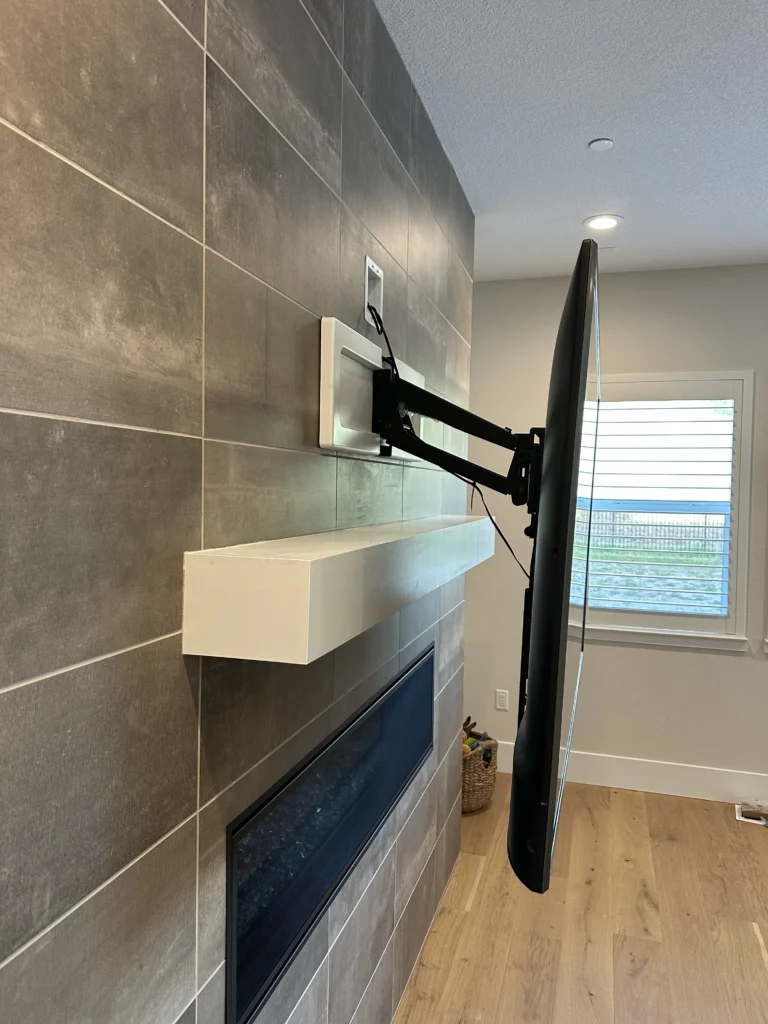
- Pick the mount for the height. A tilting mount helps a little, a full-motion mount pulls out and angles down, a MantelMount brings the TV down to eye level.
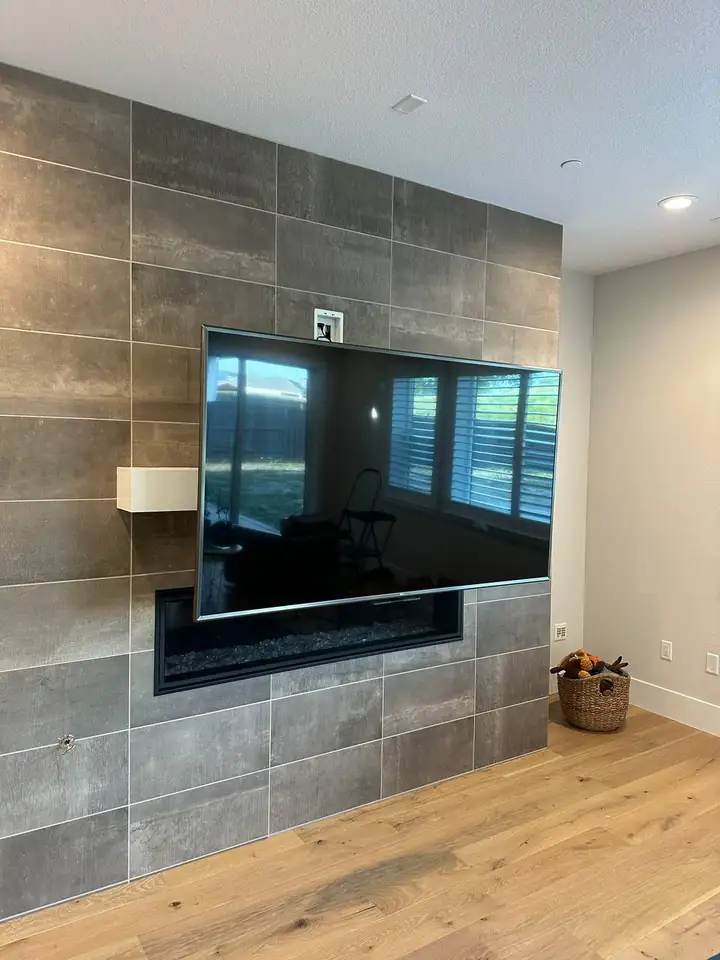
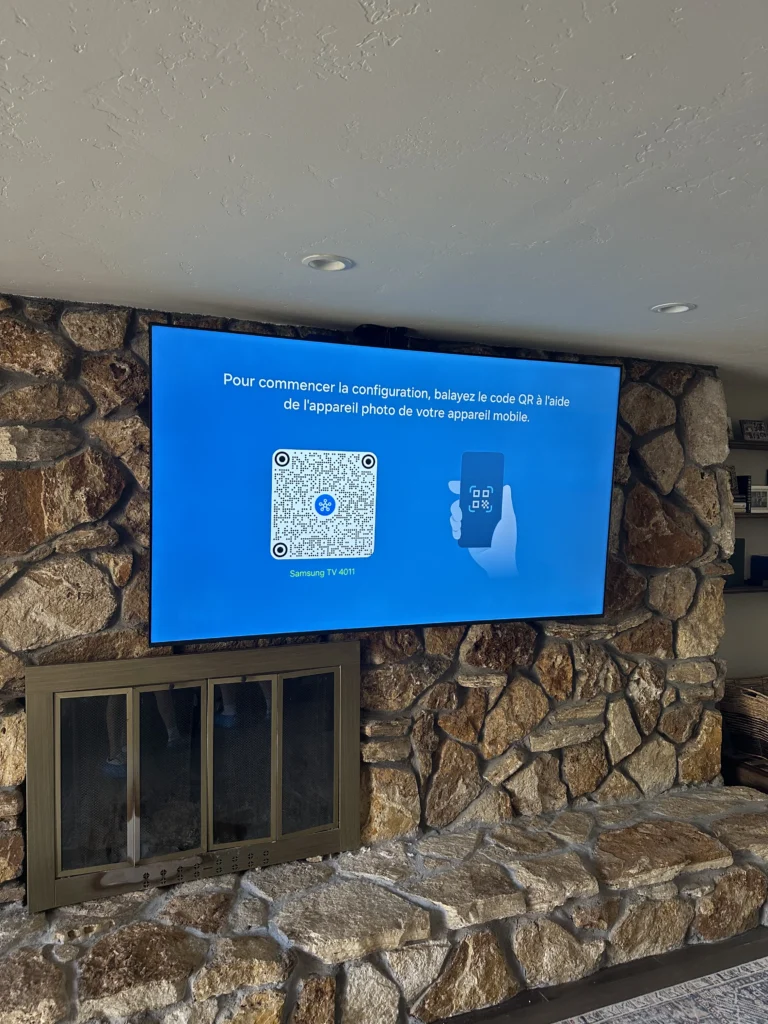
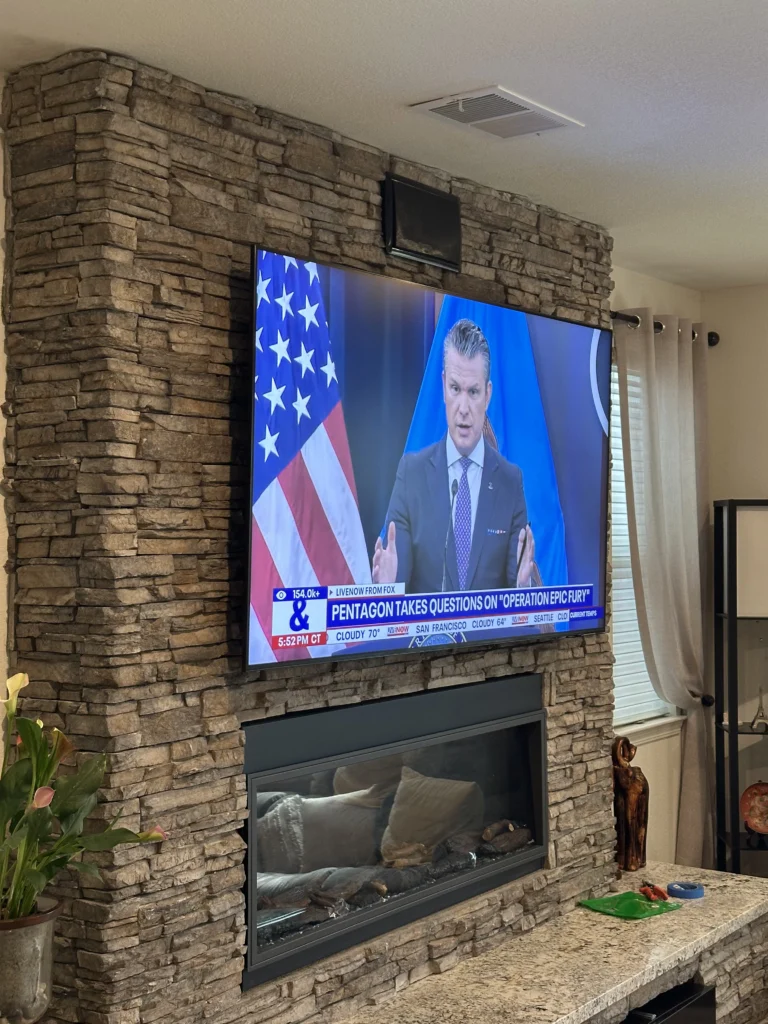
- Brick, stone and tile are fine. They need masonry anchors and a plan for the cables before anything is drilled.
1. Check the heat before anything else
Heat is the main risk. Samsung, for example, says it doesn’t recommend mounting its TVs over a fireplace and that the TV should never get hotter than 104°F. A wood fire can also leave ash and soot on the screen and in the vents. Other brands list similar limits in their manuals, so check yours.
The test is simple: run the fireplace the way you normally do for 30–60 minutes, then put your hand flat on the wall where the TV will go. If it’s uncomfortable to keep it there, the TV doesn’t belong there. An inexpensive infrared thermometer gives you a number to compare with the TV manual.
- Wood-burning: the most heat, plus soot and ash. A mantel shelf often deflects part of the rising heat.
- Gas: cleaner, but hot air still rises up the wall. Test the same way.
- Electric: most units blow warm air out the front, but some vent at the top. Check the fireplace manual.
2. How high should the TV go?
For comfortable viewing, the center of the screen should sit at or slightly below your eye level when you’re seated. In most living rooms that works out to roughly 40–45 inches from the floor.
Above a fireplace you rarely get that. An example: a 65″ TV is about 32″ tall. With the top of the mantel at 54″ and a few inches of clearance, the bottom edge sits near 58″ and the center near 74″ — about 30″ above seated eye level. From a sofa 10 feet away, that means looking up about 15° for the whole movie.
That height is fine for a TV that mostly runs the news or a game in the background. For long, daily viewing, it’s worth looking at a mount that brings the screen closer to eye level. Before anything is drilled, we tape the outline of the TV on the wall, so you can sit on your couch and check the height yourself.
3. Which mount works over a fireplace
| Mount | What it does | Good for | Price |
|---|---|---|---|
| Fixed | Holds the TV flat and close to the wall | Lower mantels, where the screen still sits near eye level | mount from $39 |
| Tilting | Angles the screen down toward the couch | A TV that is a little high; also cuts glare from windows and lights | mount from $49 |
| Full-motion | Pulls out from the wall, tilts and swivels | Corner fireplaces and rooms you watch from different seats | mount from $69 |
| MantelMount (pull-down) | Brings the TV down in front of the mantel, then back up | High mantels and everyday viewing | installation from $200 |
Mounting a TV above a fireplace is +$49 on top of the regular price ($119 up to 65″, $149 for 70–86″, from $189 for 87″ and up). Brick or concrete is +$49, tile or stone from +$69 — and only the larger of the fireplace and wall surcharges applies. Your own compatible mount is free to use; the mount prices above are for a mount we bring. With a MantelMount the above-fireplace fee is already included: from $200 for TVs up to 65″, from $250 for 70–86″, and a custom quote for 87″ and up. Brick and stone surcharges still apply.
About MantelMount
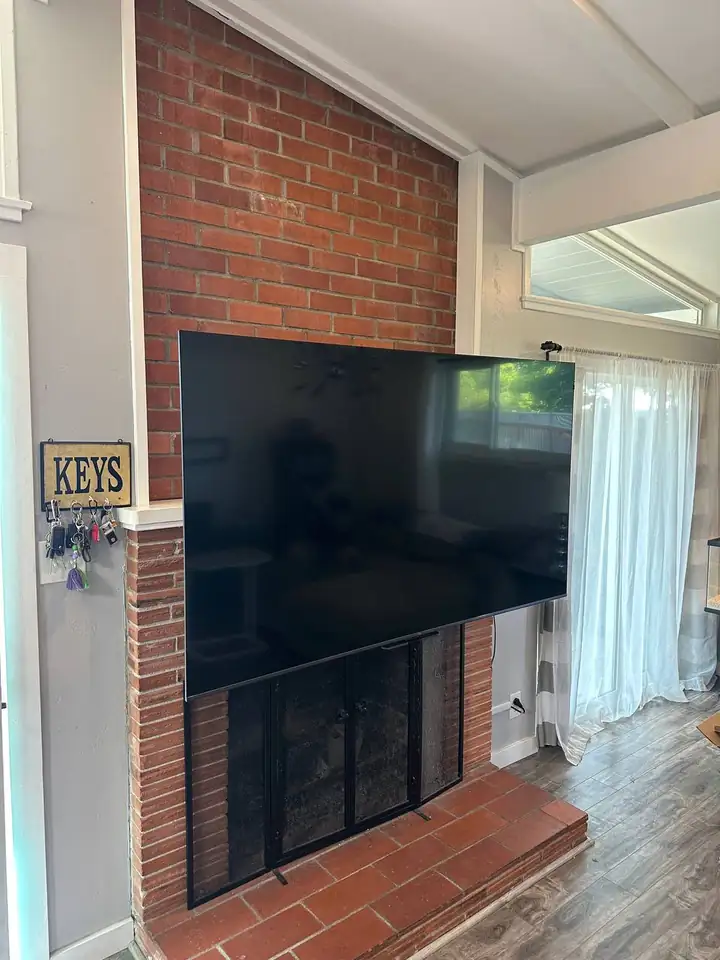
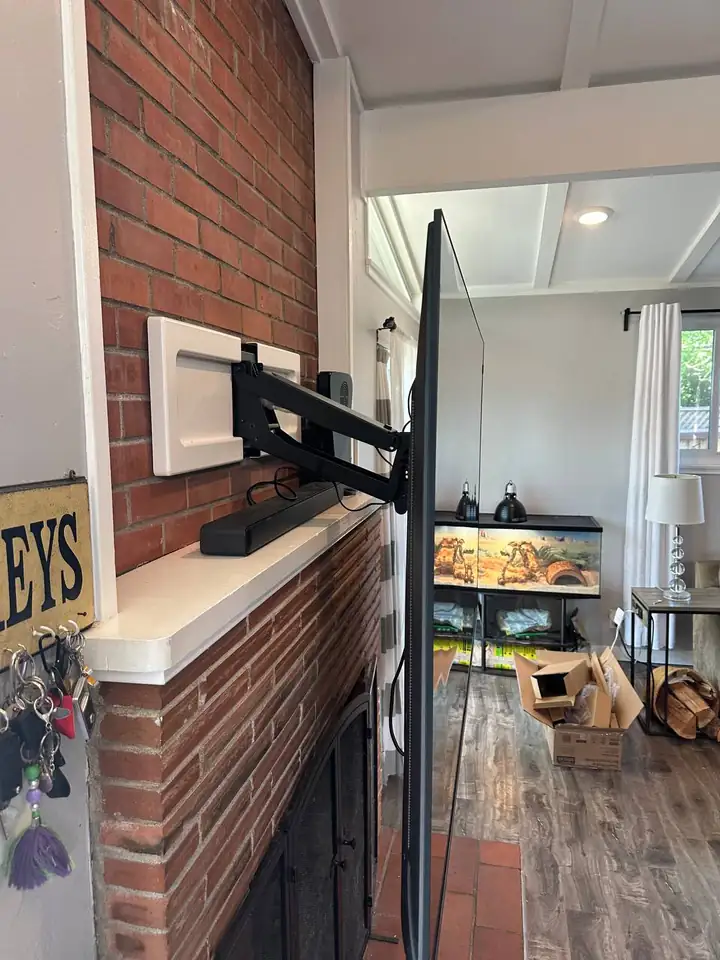
A pull-down mount uses counterbalanced arms: you pull the TV down and forward over the mantel to watch, and push it back up when you’re done. Two things decide whether it fits: how far the mantel sticks out (the TV has to clear it on the way down) and whether your TV’s size and weight are within the mount’s range. Some MantelMount models also have handles with a built-in heat indicator. Because every fireplace is different, we quote MantelMount installs from a photo of the fireplace and the wall around it.
4. Brick, stone and tile fireplaces
Drywall over wood studs is the simplest wall: the mount goes into two studs. Fireplace walls are often different — brick, stacked stone, river rock or tile. They hold a TV well, but they need masonry anchors rated for the TV and mount, the right drill bits, and on uneven stone, spacers behind the mount so the TV hangs level.
A hole in stone or tile is permanent, so the spot is marked with tape and a laser level and agreed on before drilling.
5. Wires above a fireplace
- Drywall above the mantel: your HDMI cables can run inside the wall to a plate lower down — $89. Only low-voltage cables go inside; power stays outside.
- Brick, stone or tile: cables can’t go inside the wall. They are routed neatly along the surface, or you can use a streaming stick so the TV needs only power.
- Power: electrical code doesn’t allow a regular TV power cord inside the wall. If there’s no outlet behind the TV spot, an electrician needs to add one — we don’t do electrical work.
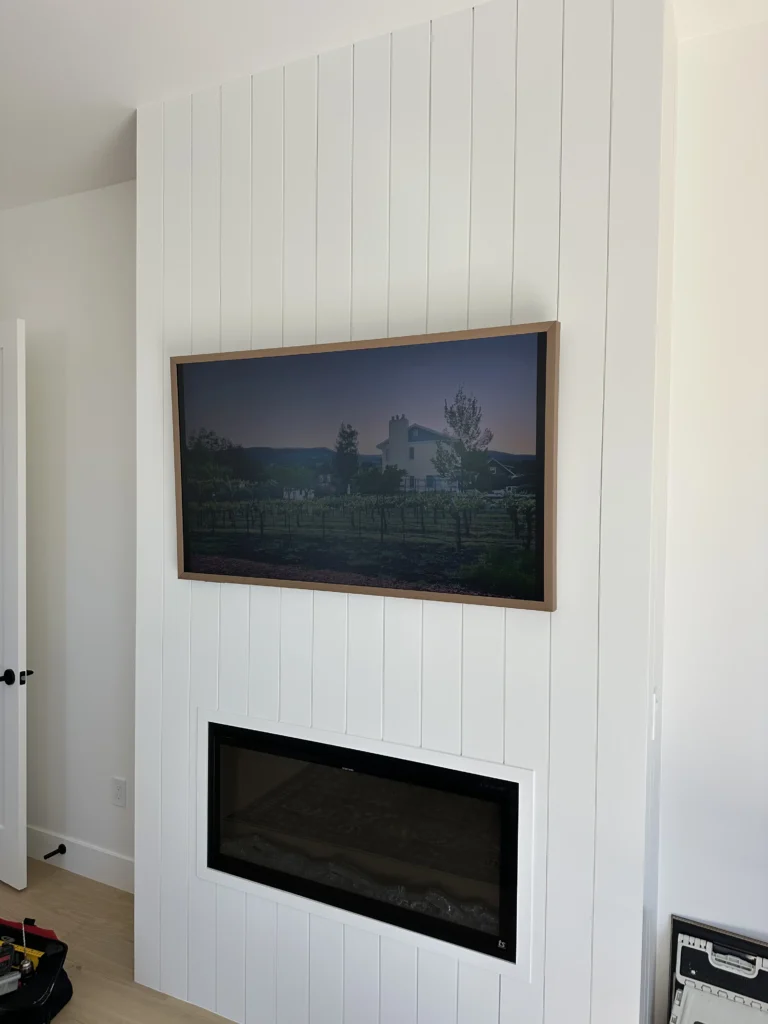
- Samsung Frame TV: the One Connect cable runs to a box you keep on the mantel or a cabinet nearby; the cable and box stay outside the wall.
6. Before you book: a 2-minute checklist
- TV size and model — the sticker on the back works.
- Fireplace type (wood, gas or electric) and the result of the hand test.
- Wall material: drywall, brick, stone or tile.
- Mantel height from the floor and how far it sticks out.
- Where the nearest outlet is.
- A photo of the whole fireplace wall — needed for a MantelMount quote.
Questions we get
Is it bad to mount a TV above a fireplace?
Not by itself. It becomes a problem when the wall gets too hot, or when the screen ends up so high that you look up for hours. Check both before deciding.
How high should a TV be above a fireplace?
As low as the mantel and the heat allow, with a few inches between the mantel and the bottom of the TV. If the center of the screen still ends up far above eye level, a tilting, full-motion or pull-down mount makes it more comfortable.
Can you mount a TV on a stone or brick fireplace?
Yes. It takes masonry anchors and more drilling time, which is why there’s a surcharge: +$49 for brick or concrete, from +$69 for tile or stone.
Can you hide the wires in a brick or stone fireplace?
Not inside the wall — in-wall cable routing is for drywall only. On brick and stone the cables are routed neatly along the surface.